Can you really tell if something was written by AI?
Updated: Aug 17, 2025
Here’s how I do it.
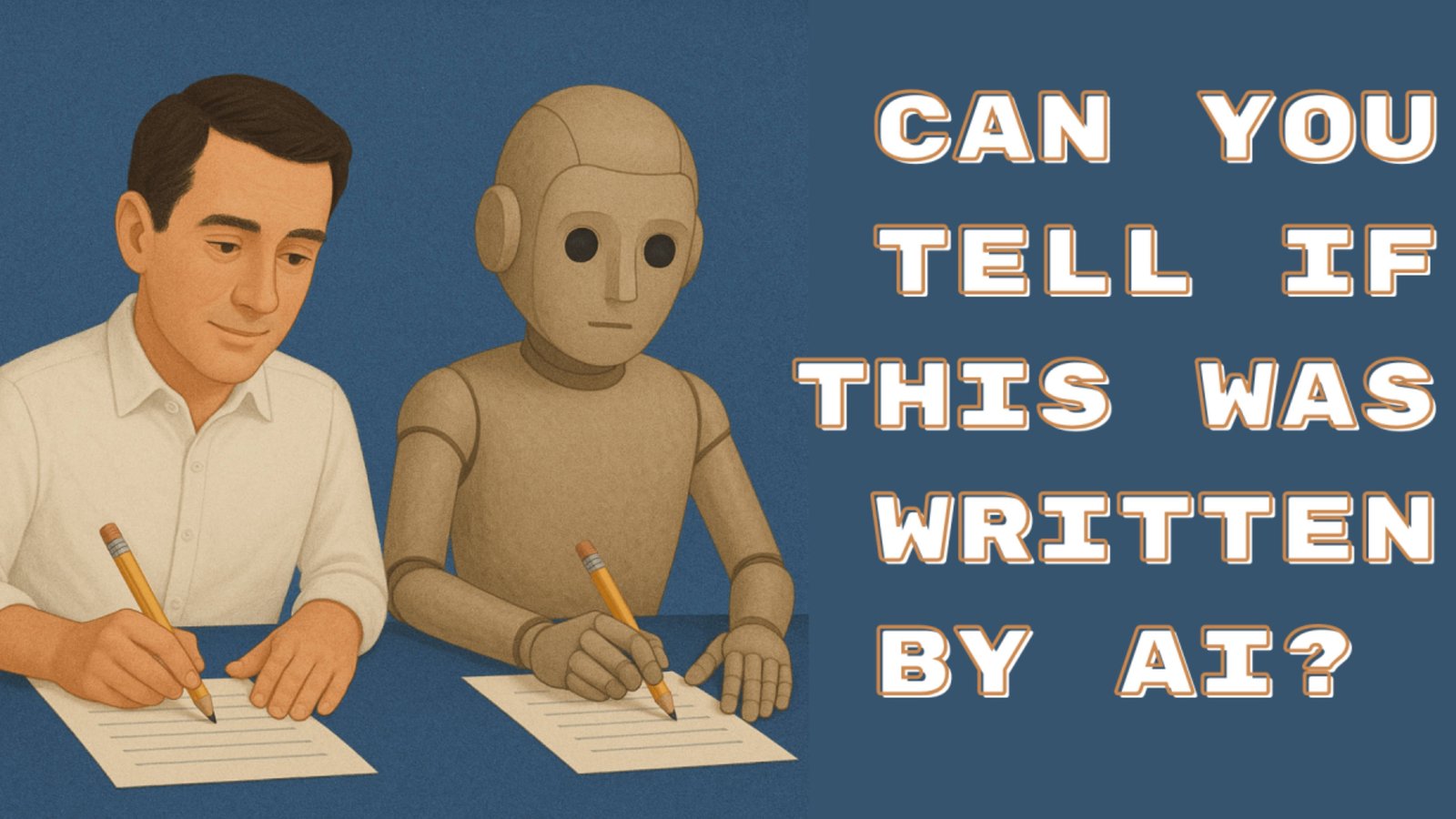
A few months ago, I was reviewing a draft a junior had sent me. On the surface, it looked perfect with clean grammar, smooth sentences, even a neat conclusion. But as I read it twice, I realised something was off. It didn’t sound like them.
That’s when I spotted the pattern. The same point was repeated three times in slightly different words. It was polished, but it lacked a story, a fingerprint of real experience. That was my first real lesson in catching AI writing.
The more I paid attention, the clearer the red flags became. And now for me, the biggest giveaways are:
- Text that feels smooth but leaves you with nothing to remember.
- Writing that avoids personal details or stories.
- A structure that looks like it came straight out of a playbook. Intro, three points, conclusion.
- Sentences that sound too cautious, as if the writer is afraid of being wrong.
Now, I want to be clear, there’s nothing wrong with using AI as support. But the mistake is letting it replace your voice. My teams emails, their reports, even their pitches, they carry their fingerprints like a late-night deal that fell through, a mistake that cost us learning, a risky experiment that worked. Those details are what make words human.
When I compare these drafts to AI text, the contrast is simple. Their writing may not always be perfect, but it carries edges. Sometimes a sentence is long, sometimes short. Sometimes they add a small personal note, sometimes they cut a paragraph halfway. That messiness is what makes it real.
For my juniors reading this, here’s my advice: don’t chase flawless writing. Chase writing that only you could create. Share the detail only you know, the mistake only you made, the lesson only you learned.
If you do that, no reader will confuse your work with AI. I'm sharing a quick reference. Do check them out.
Signs of AI Writing:
- Looks polished and leaves no memory.
- Repetition of the same point in different words.
- Predictable structures: intro > points > conclusion.
- Cautious, balanced tone that avoids strong stances.
- Generic openers like “In today’s fast-paced world…”.
- Overuse of connectors like furthermore, moreover, in conclusion.
- Even emotional tone: no humour, sarcasm, or sudden energy.
- Lack of personal detail or lived experience.
- “Perfect” grammar without natural human messiness.
- Sudden shifts in style if the prompt changes mid way.
- Inflated lengths in paragraphs where one line would do.
- No cultural idioms, small jokes, or quirks of personality.
Dear Readers:
If this helped you sharpen your eye for AI writing, share it with your team or juniors. The more we learn to write with authentic fingerprints, the stronger our professional voice becomes. Don't let them die.
Loved this? Let’s keep growing together:
📩 Subscribe to my LinkedIn Newsletter
🌐 Explore more insights on ProjectZenith.in
🐦 Follow my bite-sized thoughts on Twitter
#leaders #leadership #projectmanagement #lessonsfromexperience #careergrowth #corporatelife
Recent Posts See All
The Quiet Trap!
0 0
The Leadership Trap.
0 0
Need a Higher Org Chart Title to Lead?
0 0